


Buttonhole and shirt: taking care of the details
Men's shirt construction guide
Shirt buttonholes: construction, quality and visual details
A buttonhole is a small but essential part of the shirt. Its size, stitching, position and relationship with the button affect closure, durability and the overall finish of the garment.
What a buttonhole does
A buttonhole is an opening cut into the fabric and reinforced with stitching around its edges. It allows the button to pass through while helping the surrounding material retain its shape.
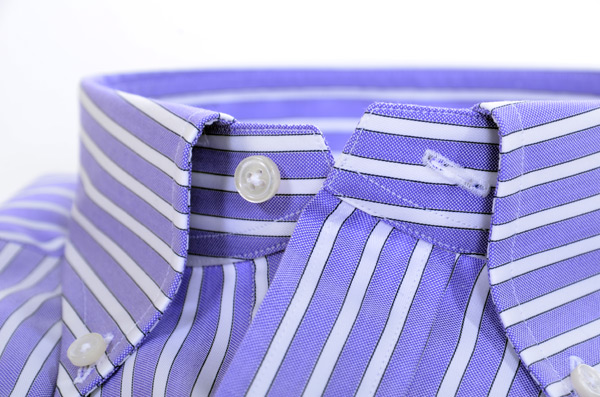
A shirt normally contains several buttonholes along the front, cuffs and sleeve plackets. Button-down collars add two more openings at the collar points.
Why the stitching matters
The stitched edge protects the cut fabric from fraying and repeated movement. The stitches should appear regular, dense enough to support the opening and free from loose thread or exposed raw edges.
A decorative colour does not compensate for irregular stitching or a buttonhole that is poorly sized for the button.
Size and alignment
- The button should pass through without forcing the fabric.
- The opening should not be so large that the button slips out easily.
- Front buttonholes should align consistently with the buttons.
- The placket should remain flat when the shirt is closed.
- Cuff and collar openings should be positioned symmetrically.
Where buttonholes appear on a shirt
Front placket
The main series of openings closes the shirt from collar to hem and must maintain even spacing.
Cuffs and sleeve plackets
These openings secure the wrist and the smaller sleeve opening used when dressing or rolling the sleeve.
Button-down collar
Small buttonholes at the collar points keep them attached to the shirt front and define this casual collar style.
Decorative or functional details
Some models use additional buttonholes on pockets or design elements, depending on the shirt's construction.
Matching thread or contrast stitching
Classic shirts generally use buttonhole thread close to the fabric colour. A contrasting thread makes the detail more visible and gives the shirt a more casual or fashion-oriented appearance.
The choice should remain coherent with the buttons, other stitching and intended use of the shirt.
Button and buttonhole must work together
Diameter, thickness and shape of the button influence the opening it requires. A thick button can be difficult to use with a narrow buttonhole, while a small button can feel insecure in an opening that is too generous.
Read the shirt button guide to compare materials, shapes and attachment quality.
Care and wear
- Unfasten buttons carefully rather than pulling the two sides of the shirt apart.
- Check for loose thread before washing or ironing.
- Avoid placing a hot iron directly on raised stitching or buttons.
- Repair a damaged opening before the fabric continues to fray.
Frequently asked questions
Should every buttonhole be the same size?
Not necessarily. Different buttons can require slightly different openings, but each buttonhole must be correctly proportioned and consistently finished.
Does contrasting thread mean higher quality?
No. Contrast is a design decision. Quality depends on regular stitching, reinforcement, alignment and compatibility with the button.
Why do some collars have buttonholes?
Button-down collars use small openings at the points so they can be secured to buttons on the shirt front.
Look beyond the fabric
Buttonholes, buttons, collars and cuffs reveal how carefully the shirt has been designed and finished.
Extra DISCOUNT 10% OFF
Use code: RESTYLE - minimum purchase 99 EUR
Use code: RESTYLE
minimum purchase 99 EUR
Login and Registration Form