


Cuffs and shirt collars: pay attention to their wear and tear
Shirt care and durability
Shirt collars and cuffs: why they wear and how to protect them
Collars and cuffs experience more friction, perspiration, washing and contact with accessories than most of the shirt. Correct sizing and care can slow visible wear and keep the garment looking orderly for longer.
The most heavily used areas of a shirt
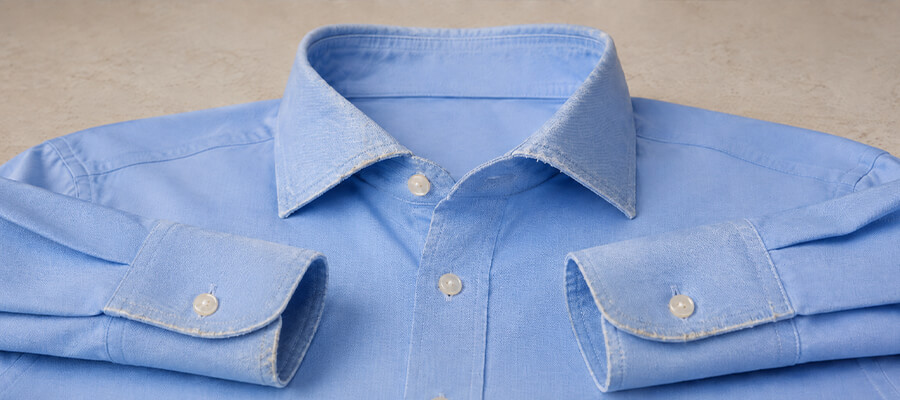
The collar remains in contact with the neck, beard, perspiration and personal-care products. Cuffs repeatedly touch skin, desk surfaces, jacket sleeves, watches and bracelets. For this reason, wear often appears at their edges before the rest of the shirt shows the same level of ageing.
Main causes of wear
Friction
Skin, beard, watches, jackets and work surfaces gradually abrade the fibres.
Perspiration and residue
Body oils and cosmetic products can weaken or discolour fabric over time.
Aggressive washing
Excess heat, strong spinning and unsuitable products add unnecessary stress.
Excessive ironing
Repeated heat and pressure in the same area can shine or weaken fibres.
Signs to monitor
- Lightening or colour change along the edges.
- A rougher surface than the rest of the garment.
- Raised fibres or worn stitching.
- Fabric becoming visibly thinner.
- Collar or cuff edges losing their original shape.
How to slow the process
- Rotate shirts rather than repeatedly wearing the same garment.
- Pre-treat collar and cuffs gently without scrubbing.
- Follow the washing temperature and programme on the care label.
- Avoid aggressive products unless they are specifically permitted.
- Use the correct ironing temperature and avoid prolonged pressure on the edges.
Watches, bracelets and cuff fit
A rigid watch strap, prominent watch case or bracelet can rub continuously against the cuff. Check that the cuff is not trapped tightly between the wrist and the accessory.
Correct shirt size also matters. A sleeve or cuff that is too tight increases pressure and friction during movement.
Beard and collar size
A short, coarse beard can act like an abrasive surface. A collar that is too tight also increases heat, pressure and friction. Measure the neck correctly and compare the result with the shirt's size information.
Use the collar-size guide when the shirt will be worn buttoned.
Repair or replace?
Collars and cuffs can technically be replaced on some shirts, but the work is labour-intensive and may not be economical. Repair makes more sense when the garment has exceptional construction, individual tailoring or personal value.
When the fabric is thin, frayed, torn or no longer holds its shape, replacing the shirt generally produces a cleaner and more reliable result.
Correct care starts before visible damage
Fit, washing and ironing all influence how quickly collars and cuffs age.
Extra DISCOUNT 10% OFF
Use code: RESTYLE - minimum purchase 99 EUR
Use code: RESTYLE
minimum purchase 99 EUR
Login and Registration Form