


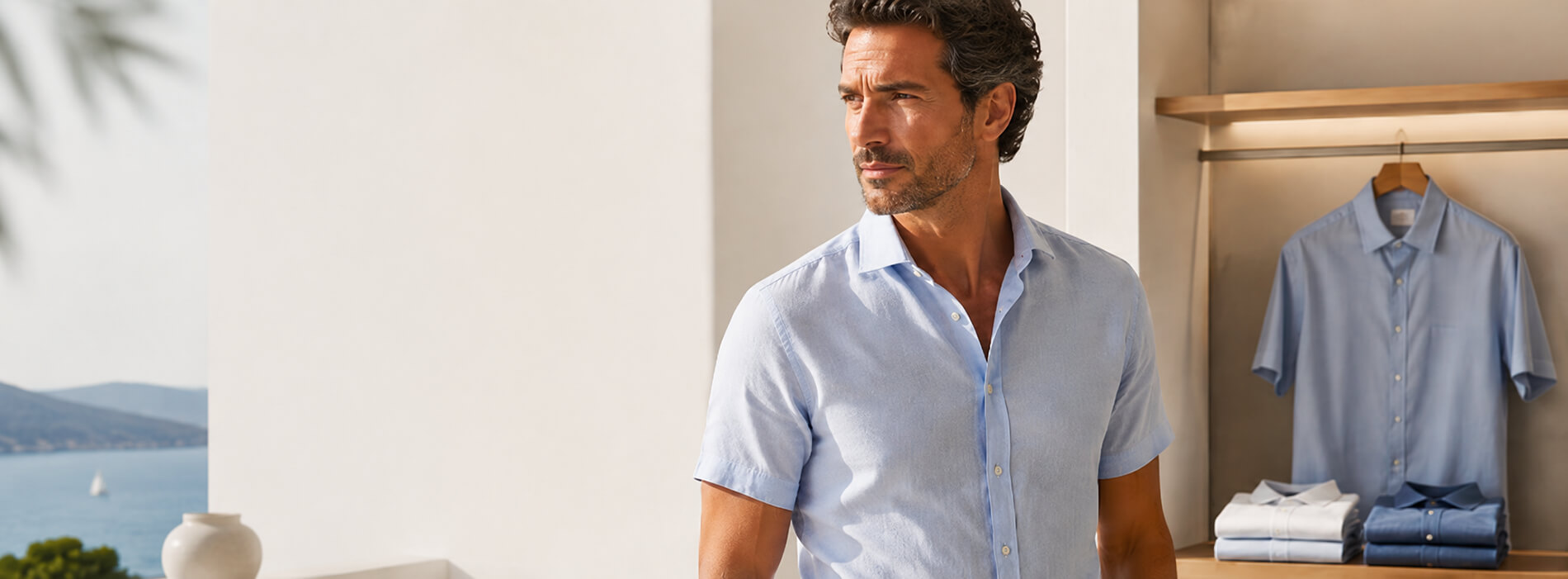
Men's summer shirt guide
Men's short-sleeve shirts: how to choose and wear them
A short-sleeve shirt can look relaxed, modern and well proportioned when fit, fabric, collar and sleeve length are chosen carefully. It is most natural for leisure, travel and business-casual settings rather than highly formal occasions.
From sportswear to a versatile summer option
Short-sleeve shirts were long associated mainly with leisure and practical uniforms. Modern models use cleaner proportions, lighter fabrics and less rigid collars, making the garment easier to combine with chinos, denim and tailored Bermuda shorts.
The result still depends on construction. A shirt with an oversized sleeve opening, excessive body volume or a very long hem can appear untidy even when the fabric and colour are appropriate.
When to wear a short-sleeve shirt
Leisure
The most natural setting. Combine it with jeans, chinos, Bermuda shorts and clean casual footwear.
Travel and holidays
Light fabrics and coordinated colours make it practical for warm destinations and daytime activities.
Business casual
A plain, well-proportioned model can work in less formal workplaces with clean trousers and understated shoes.
Formal occasions
For ceremonies, traditional business dress and a suit with a tie, a long-sleeve shirt remains the more coherent option.
How the sleeve should sit
- The shoulder seam should finish close to the natural edge of the shoulder.
- The sleeve should follow the upper arm without gripping it.
- The opening should not flare widely away from the arm.
- The chest and abdomen should remain smooth during movement.
- The overall length should suit whether the shirt is worn tucked in or untucked.
Choose the fit
Slim Fit
A shaped line for lean builds, provided the sleeve and armhole remain comfortable.
Regular Fit
A balanced silhouette for leisure and business casual.
Classic Fit
More room through the chest and waist with a traditional profile.
Comfort Fit
Greater ease and freedom of movement without requiring an oversized shoulder.
Use the shirt fit guide to understand the difference between size and silhouette.
Fabrics and collars for warm weather
Lightweight cotton
Available in different weaves and weights, with a clean or more casual surface.
Linen
Breathable and naturally textured, with visible creasing as part of its relaxed appearance.
Stretch fabrics
A small stretch component can improve movement, especially in closer fits.
Italian, button-down, band and open collars can all work, depending on the level of formality. The collar guide explains the main differences.
Four reliable combinations
With chinos
White or light blue shirts combine easily with beige, navy, grey and olive trousers.
With jeans
Use a clean fit and finish the outfit with sneakers or casual loafers.
With Bermuda shorts
Keep the shirt and shorts proportionate and use colours from the same controlled palette.
Open over a T-shirt
A casual model can work as a light layer over a simple, low-volume T-shirt.
Before ordering
- Check sleeve length and the width of the opening.
- Choose the fit according to build and intended use.
- Review fabric weight and composition for the season.
- Confirm whether the hem is designed to be worn inside or outside the trousers.
- Use product measurements and care instructions as the final reference.
Frequently asked questions
Can a short-sleeve shirt be worn to work?
It can suit a business-casual environment when it is plain, well fitted and combined with clean trousers. Formal dress codes generally favour long sleeves.
Should the sleeve be tight around the arm?
No. It should follow the arm without pressing or flaring widely away from it.
Can I wear a tie with a short-sleeve shirt?
The combination exists in uniforms, but for most formal or professional outfits a long-sleeve shirt creates a more balanced result.
Choose a balanced summer shirt
Use the occasion to set the level of formality, then confirm fit, sleeve proportions, fabric and collar.
Extra DISCOUNT 10% OFF
Use code: RESTYLE - minimum purchase 99 EUR
Use code: RESTYLE
minimum purchase 99 EUR
Login and Registration Form