


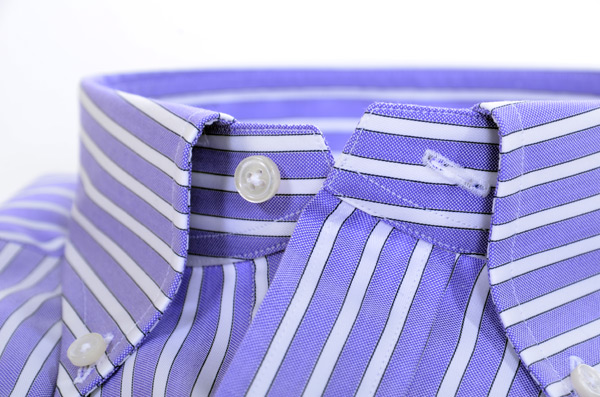
Shirt construction details
Shirt buttonholes: construction, alignment and quality
A well-made buttonhole should be clean, reinforced and correctly proportioned to its button. It affects closure, durability and the visual finish of the shirt.
Why the stitching matters
The stitched edge protects the cut fabric from fraying. Stitches should be regular and dense enough to support repeated use without exposed raw edges or loose thread.
Size and alignment
- The button should pass through without forcing the fabric.
- The opening should not be so large that the button slips out easily.
- Front buttonholes should align consistently with the buttons.
- The placket should remain flat when the shirt is closed.
- Cuff and collar buttonholes should be positioned symmetrically.
Matching or contrasting thread
Classic shirts generally use thread close to the fabric colour. Contrast stitching makes the detail more visible and gives the garment a more casual or fashion-led character. The choice should remain coherent with buttons and other visible stitching.
Button and buttonhole work as a pair
Diameter, thickness and shape of the button determine the opening it needs. A thick button can be difficult to use with a narrow buttonhole, while a small button can feel insecure in an opening that is too generous.
Look beyond the fabric
Extra DISCOUNT 10% OFF
Use code: RESTYLE - minimum purchase 99 EUR
Use code: RESTYLE
minimum purchase 99 EUR
Login and Registration Form